Nishi Ward

Boulangerie P&B

Bakery4.5 on GoogleAbout $7 a head
Boulangerie P&B

Why go

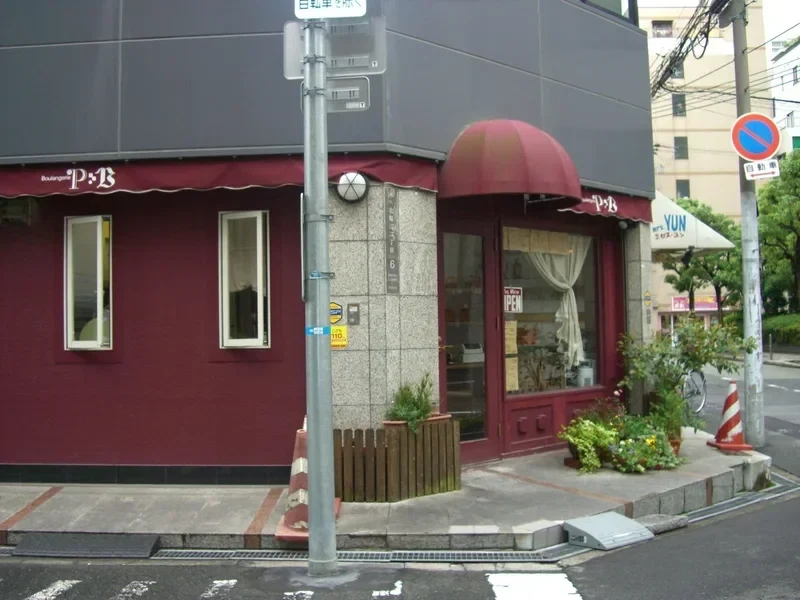
Kitahorie is a neighbourhood where good food rarely announces itself loudly. Around Nishi-Ohashi, the pace is measured: design offices, small cafés, patisseries, curry counters, and bakeries that rely less on spectacle than repeat traffic. Boulangerie P&B fits a familiar Osaka pattern: a compact bread shop where regulars know the selection changes, timing matters, and hesitation can mean watching the last item disappear into another customer’s bag.

Osaka’s casual dining reputation often rests on takoyaki, okonomiyaki, kushikatsu, and the city’s appetite for heat, sauce, and speed. Bread occupies a quieter but no less competitive lane. Japanese bakeries have absorbed French technique, German texture, and local convenience culture, turning the daily bakery run into a precision habit. A shop that earns repeat placement in Tabelog’s Bread 100 conversation is not merely making breakfast; it competes where crumb, fermentation, turnover, and shelf rhythm matter to customers who buy often enough to notice changes.

Kitahorie regulars treat bread as a timed purchase, not a casual browse

The regulars’ perspective is the useful one. This is not a dining room for lingering, comparison tasting, or a long afternoon over coffee. It is take-out by format, with bread and bagels as the core categories, which sharpens the decision. Customers choose what travels, what survives the walk, what can become lunch, and what is worth buying before production thins out. The note that the shop closes once bread sells out is not a charming aside; it is the operating logic.

That rhythm separates it from larger café-bakery hybrids. A nearby pastry shop such as LE PINEAU Kitahorie honten occupies a broader sweets-and-gifting lane, while MIKI FRUITS CAFE sits in the fruit-dessert and café bracket. Boulangerie P&B belongs to Kitahorie’s more utilitarian eating: focused, portable, repeatable. It is closer to the practical instinct that sends Osaka residents to a single-purpose curry counter, okonomiyaki address, or dumpling queue rather than a room trying to cover every appetite.

The price band reinforces its everyday role. In a city where many casual restaurants now sit around JPY 3,000 to JPY 5,000 for dinner, a bakery purchase under the lower everyday range changes the calculus. It can be breakfast, a train snack, or one stop in a longer eating day. That matters in Osaka, where better itineraries are assembled from small, precise stops: a bakery in Kitahorie, a counter lunch, a market snack, then a bar later.

The Tabelog Bread 100 signal places it in Osaka's serious bakery tier

Boulangerie P&B was selected for Tabelog Bread WEST “Tabelog 100” in 2022, with earlier Bread 100 selections listed for 2020, 2019, 2018, and 2017. In Japan, that recognition matters because bread shops are judged by a public that buys frequently, not by a once-a-year tasting-menu mindset. The listed score of 3.70 adds context: this is a specific category, and Japanese bakery ratings often reward consistency and narrow execution over theatrical ambition.

There is an Osaka distinction worth making. The city prizes value, speed, and clarity, but not simplicity. A bread shop can hold status without adopting restaurant language. The skill is daily production discipline, shelves that change as customers move through the day, and a format that gives the buyer responsibility. Regulars learn the unwritten menu through repetition: which category disappears first, which loaf suits home use, which bagel belongs in the bag even when the plan was only bread.

For travellers, the bakery is a different stop from the city’s headline dining rooms. It does not replace Osaka’s sit-down meals, but it explains a layer of local eating that reservations miss. A route might place Boulangerie P&B beside obvious addresses rather than below them: compare the grab-and-go efficiency of 551 Horai (551蓬莱), the neighbourhood specificity of 52CHO-ME BAKERY, or the café register of .cafe. For a wider map of the city’s dining patterns, use Our full Osaka restaurants guide, then layer in Our full Osaka bars guide, Our full Osaka hotels guide, Our full Osaka wineries guide, and Our full Osaka experiences guide for the rest of the day.

How to fit it into a sharper Osaka food day

Treat this as a precision stop rather than a meal anchor. Kitahorie works well because it sits outside the heaviest tourist circuit while staying connected to central Osaka eating. A bakery run here can precede a structured lunch, follow a coffee stop, or serve as insurance against the city’s habit of stretching a casual afternoon into hours between proper meals.

The Osaka comparison set is instructive. Mrs. Yun and Okonomi Tamachan Viva operate in higher casual-dinner bands, while Curry & Spice Warung and LE PINEAU Kitahorie honten sit closer to the everyday specialist model. Boulangerie P&B is lower-commitment by format, but not lower in seriousness. That distinction helps visitors who assume a small spend equals a minor stop. In Japan’s bakery culture, the small purchase is often where regulars become demanding.

There is no need to turn the visit into a grand plan. The right expectation is narrower and better: a focused bread and bagel shop with recognized standing in western Japan’s bakery field, a take-out structure, and a clientele that understands timing. For broader Japan food itineraries, the same specialist logic connects outward: a canto (Italian) and 99 Pizza Napoletana Gourmet show how Osaka absorbs European forms into local dining habits, while addresses farther afield such as [ki:] in Kyoto, [Curry Senmon Ten] Maruyama Kyoju. in Sapporo,.know in Kumamoto, (Shoku) Vietnam in Kawasaki,. 鮪と炭火焼き うお炭 秋葉原店 in Tokyo, and -Grilled beef Sukiyaki- KAMAKURA TANUKIAN 鎌倉 たぬき庵 in Kamakura underline the same point: Japan rewards diners who take small formats seriously. Across the Pacific, Jōdo Saké Bar in Los Angeles and Onigiri Time in Pasadena show how portable Japanese food culture travels, though Osaka’s version remains more tightly woven into daily neighbourhood life.

Tags

Hidden GemSoloCasual HangoutAfter WorkStandalone