Why go
Ice Cream in Utah Valley: What the Local Tradition Looks Like
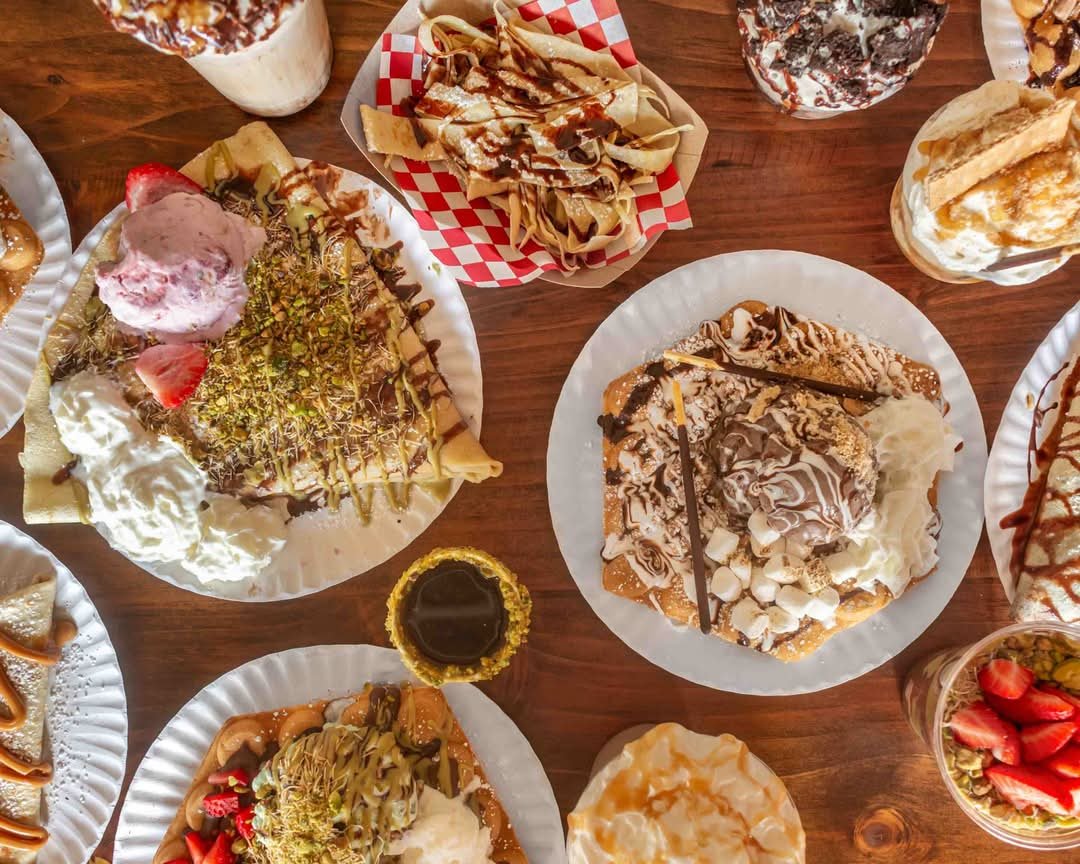
Utah Valley has a particular relationship with ice cream and frozen desserts that outpaces most comparable American metros in per-capita consumption. The reasons are cultural and demographic: a large, young family population, strong community gathering habits, and a significant proportion of residents who do not drink alcohol, which directs discretionary spending toward dessert-oriented social venues. In that context, specialty ice cream shops in cities like Vineyard occupy a social role that cocktail bars or wine-focused restaurants fill elsewhere. Brooker's Founding Flavors is a restaurant in Vineyard, Utah, serving super-premium homemade ice cream and early American treats at about $12 per person. It operates inside that pattern.
The Setting on Mill Road
Vineyard is one of Utah County's fastest-growing municipalities, built largely on former orchard and farmland along the eastern shore of Utah Lake. The Mill Road retail strip where Brooker's operates reflects that growth: relatively new construction, family-oriented retail neighbors, and a customer base drawn from the surrounding residential developments rather than from tourist circuits. Walking up to the storefront, the format reads as a neighborhood destination rather than a destination-in-itself, which shapes expectations in a useful way. You are not arriving at a food-hall spectacle. You are arriving at a community ice cream counter embedded in a suburban commercial block, and the experience tracks accordingly.
That positioning is not a limitation. Some of the most consistent ice cream in American cities comes from exactly this format: modest footprint, focused product range, repeat local clientele who provide real feedback loops. The high-footfall novelty shop with rotating gimmick flavors rarely develops the kind of product discipline that a genuine neighborhood anchor demands. The same logic applies at the ice cream scale: where ingredients come from determines what ends up in the cup.
Ingredient Sourcing and Why It Matters at This Category
The ice cream category is more ingredient-sensitive than most casual diners appreciate. The base dairy profile, the fat content, the source of flavoring agents, and the processing temperature all compound into the final texture and flavor clarity. American craft ice cream has moved meaningfully in the past decade toward named-source dairy and locally grown fruit inclusions, partly following the broader farm-to-table trajectory that venues like Smyth in Chicago and Bacchanalia in Atlanta established for savory dining. Utah specifically has a strong agricultural base in stone fruits, berries, and dairy production in Cache Valley and surrounding regions, which gives local ice cream producers genuine access to quality raw materials without the supply-chain distance that constrains operators in denser coastal markets.
The name "Founding Flavors" signals an orientation toward classic or heritage flavor profiles rather than novelty-driven rotations. In the American craft ice cream context, that positioning tends to correlate with a focus on base quality: if you are not hiding behind unusual mix-ins or theatrical presentations, the dairy and primary flavoring have to hold up on their own. Whether Brooker's executes on that implied promise is a judgment that requires a firsthand visit, but the framing itself is a meaningful editorial signal about what the operation is attempting.
Shops in the Mountain West that lean into regional sourcing often reference local berries, Utah peaches from orchards along the Wasatch Front, or Cache Valley dairy. Those ingredients have genuine provenance value and produce flavor profiles that differ measurably from commodity-sourced equivalents. Venues like Frasca Food and Wine in Boulder and The Wolf's Tailor in Denver have demonstrated that Mountain West diners respond to ingredient transparency when it is communicated clearly. The same appetite exists at the ice cream tier.
Placing Brooker's in the Vineyard Context
Vineyard sits between Orem and Lindon on the Utah Lake shoreline, close enough to Provo to draw from Brigham Young University's student and young-family population but distinct enough in character to feel suburban rather than university-adjacent. The ice cream shop category in Utah County is competitive: several regional chains and independent operators have established strong followings, and differentiation depends on either product quality, flavor range, or community integration. Brooker's address on Mill Road places it in a commercial zone that serves residential neighborhoods directly, which favors repeat visits over one-time traffic.
Brooker's represents the dessert and casual tier of the local food scene rather than the sit-down dining circuit. It belongs in an itinerary as a standalone stop or a post-dinner punctuation, not as a centerpiece reservation. That is not a hierarchy judgment; it is a practical framing that helps visitors allocate time correctly.
The broader American conversation about ingredient provenance in dessert formats has been shaped by operations ranging from fine-dining pastry programs in New York City and Napa down to independent scoop shops that apply comparable sourcing discipline at accessible price points. Providence in Los Angeles, Addison in San Diego, and Oyster Oyster in Washington, D.C. each treat ingredient origin as a non-negotiable editorial premise. The trickle-down effect of that movement has raised consumer expectations across all food categories, including ice cream, in ways that benefit operators willing to source carefully.
Planning Your Visit
Brooker's Founding Flavors is at 568 N Mill Rd, Suite A101, Vineyard, UT 84059. Brooker's is open Monday through Saturday from 11 AM to 11 PM and Sunday from 11 AM to 10 PM. The shop's walk-in format is consistent with the neighborhood ice cream category: counter service and visit length determined by the customer. Families with children will find the format direct. Afternoon and early evening windows, particularly on weekends, align with the local family traffic patterns that define Utah County's dessert scene.
For context on how other sourcing-focused American venues handle the practical side of the visitor experience, Lazy Bear in San Francisco, Emeril's in New Orleans, ITAMAE in Miami, Atomix in New York City, The Inn at Little Washington, and Atelier Moessmer Norbert Niederkofler in Brunico each demonstrate that clarity of purpose, at any price tier, is what distinguishes memorable food experiences from forgettable ones. Brooker's operates at a very different scale, but the question it needs to answer is the same: does the product justify the detour?