Why go
Ebisu’s west side has a particular rhythm: office workers leaving the station, side-street drinkers disappearing upstairs, and cafés that behave less like daytime refuelling stops than preludes to the night. Cafe Tram belongs to that second Tokyo café tradition, where coffee, cake, kissaten habits, and bar-adjacent mood sit in the same room. The address is on the second floor in Ebisunishi, close enough to the station to be convenient, but set into the kind of building Tokyo uses for smaller, more personal rooms rather than street-facing spectacle.
That matters because Tokyo’s café culture is not a single category. There are design cafés built for queues, old kissaten built around regulars, dessert rooms, and hybrid spaces that run on coffee by day and alcohol by night. This one falls into the hybrid camp. Its public classification covers café, kissa, and cake, while the drink side includes cocktails. In a city where many cafés close before dinner, the format gives Ebisu a different kind of afternoon-to-late-evening stop: less transactional than a chain coffee counter, less formal than a restaurant, and more connected to the neighbourhood’s bar map than a typical cake café.
Ebisu's café-bar overlap gives the room its point of view
The strongest reason to understand Cafe Tram through place is that Ebisu already has a mature drinking culture, but not every room in that orbit wants to announce itself as a cocktail destination. The café service runs Wednesday to Sunday in the afternoon, while the Bar Tram identity takes over from evening. That split format explains the appeal better than any single menu label. It lets the same address operate for coffee, cake, and lighter drinking without forcing the experience into either a pure kissaten model or a formal bar model.
The recognition gives the format external weight. Selection for Tabelog 100 Cafe EAST 2025 places it inside a competitive eastern Japan café field, and earlier selections for Tabelog 100 Cafe 2022 and Tabelog 100 Kissaten 2021 show that the room has been read across both café and Japanese coffee-shop traditions. A Tabelog score of 3.70 is also meaningful in Tokyo’s review culture, where scores tend to cluster tightly and specialist rooms often build reputation through repeat local use rather than splashy openings.
Price is part of the editorial argument. At JPY 1,000–1,999, the average spend sits well below the dinner-oriented comparison set nearby: BAR Go is listed at JPY 4,000–4,999, Nawa Noren at JPY 3,000–3,999, and Kirin at JPY 8,000–9,999. That gap makes the café useful for a different decision. It is not trying to compete with a full evening out; it occupies the cheaper, more flexible slot before or between Ebisu plans.
A small-room format, not a destination spectacle
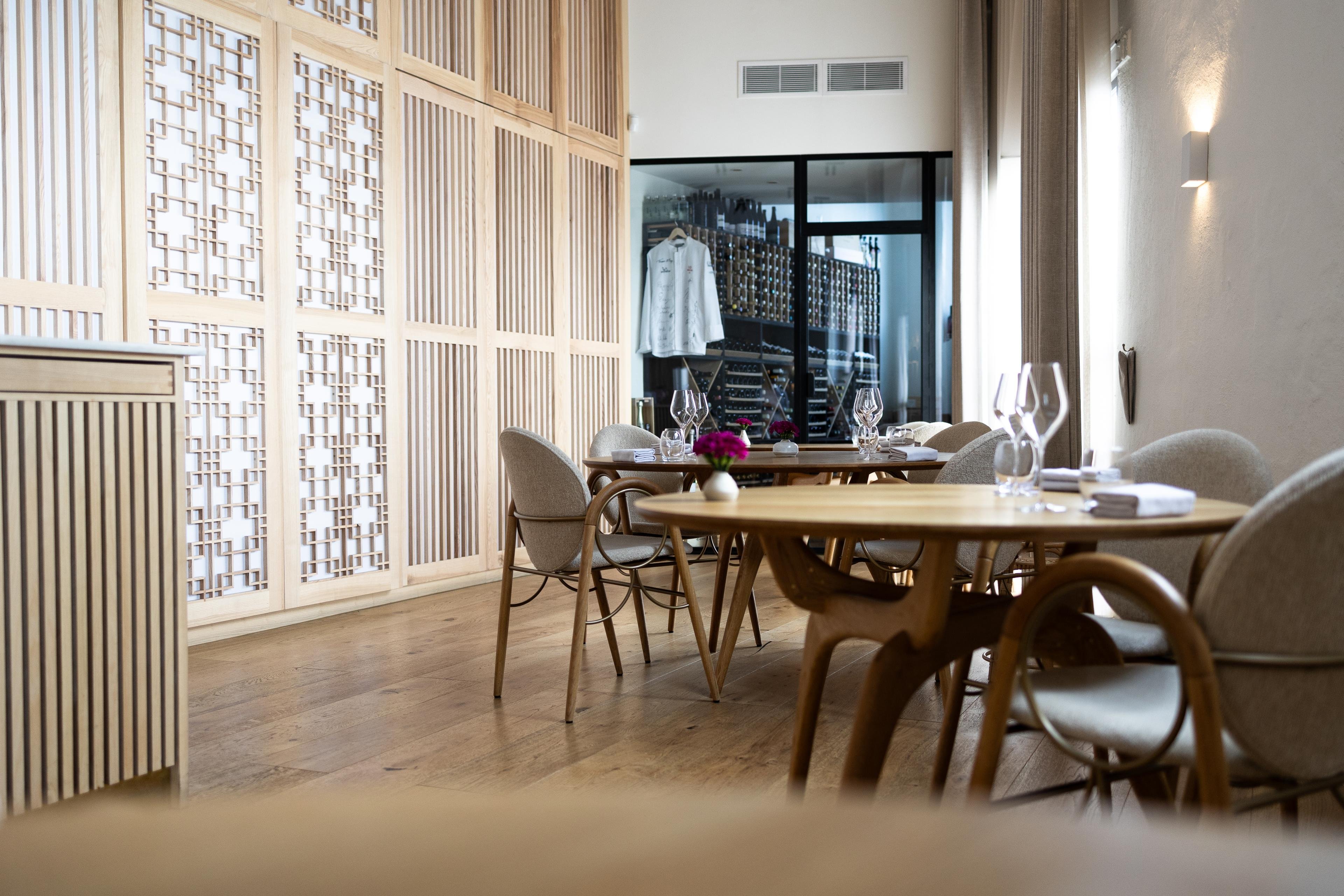
The seating count sharpens the picture. Thirty-one seats, including eight counter seats and 23 table seats, put it in the small Tokyo room category, where pacing and atmosphere depend on timing more than scale. Counter seating matters in Japanese café culture because it can shift a visit from group socialising to solitary drinking or reading without changing the premise of the place. Tables keep it workable for friends, which matches the occasion most associated with the address.
The room is also part of a small west-exit family connected to herbal liquors, absinthe, and craft cocktails. Bar Tram opened in 2003 as a specialist in herbal liquors and absinthe, and the group now includes several nearby venues. That context is more useful than a founder story: it explains why a café in Ebisu can feel adjacent to bar culture without turning into a full cocktail bar from the first hour of service.
For travellers building a Tokyo food day, this is a good reminder that not every serious address needs to be a tasting menu, counter omakase, or reservation chase. Tokyo rewards smaller categories. A café selected in the Tabelog 100 is operating in a different arena from yakitori, curry, sushi, or hotel dining, but the same logic applies: format discipline counts. Readers comparing neighbourhood stops can place it alongside broader Tokyo planning through Our full Tokyo restaurants guide, then separate café time from drinking time with Our full Tokyo bars guide.
How to use it in a Tokyo itinerary
The practical play is simple: treat the café window as an Ebisu afternoon anchor, then leave the evening open for bars or dinner nearby. Wednesday through Sunday gives the strongest café-use case, while the later hours belong more naturally to the Bar Tram side of the operation. Reservations are available, private rooms are not, private use is unavailable, and payment works with major credit cards plus transport IC, iD, and QUICPay; QR payments are not accepted. Parking is not provided, so the station approach is the cleaner plan.
For a wider Tokyo day, the contrast is useful. A visitor could pair a café stop with something meatier elsewhere, such as . 鮪と炭火焼き うお炭 秋葉原店, 12/10 Shinjuku ten, or 124. KAGURAZAKA (Yakitori). The café category has its own visual and dessert-led outliers too, including 2D Cafe, while curry-focused detours such as 3 Chome no Curry Ya San show how narrow Tokyo specialisms can carry a whole visit.
Beyond Tokyo, the same category thinking helps. Compare Japanese café culture with.cafe in Osaka, regional cooking at.know in Kumamoto, Vietnamese cooking at (Shoku) Vietnam in Kawasaki, curry in Hokkaido through [Curry Senmon Ten] Maruyama Kyoju. in Sapporo, and Kyoto’s small-format dining at [ki:] in Kyoto. For non-restaurant planning around the city, use Our full Tokyo hotels guide, Our full Tokyo wineries guide, and Our full Tokyo experiences guide. Travellers extending the Japanese-food thread abroad may also compare Jōdo Saké Bar in Los Angeles and Onigiri Time in Pasadena, while a side trip from Tokyo can point toward -Grilled beef Sukiyaki- KAMAKURA TANUKIAN 鎌倉 たぬき庵 in Kamakura.