Why go
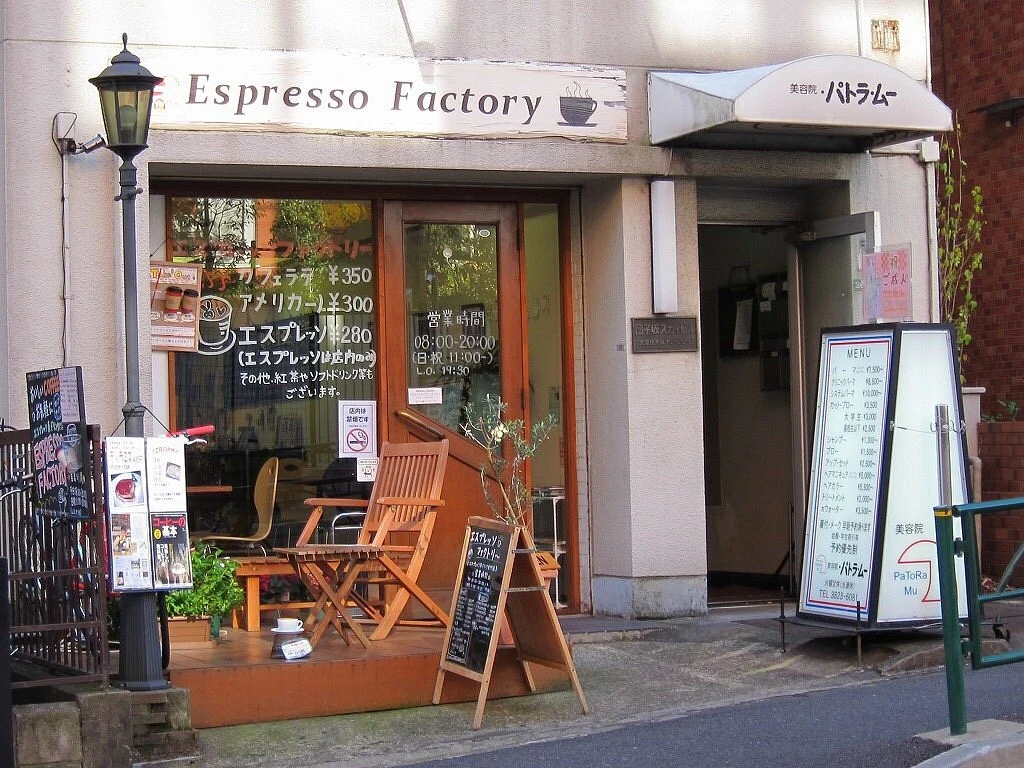
Sendagi’s cafe scene moves at pedestrian speed. Around Dangozaka, Tokyo tightens into small shopfronts, station routines, and rooms built for regular use rather than spectacle. Espresso Factory fits that scale: a compact cafe with counter seating, sofa tables, standard two-seaters, a five-seat table, and standing bar spots. The room reads less like a lounge than a practical Tokyo coffee stop with enough softness to hold a pause.
That container matters. Tokyo has no single cafe template: kissaten culture prizes lingering, third-wave counters prize technical service, and sweets cafes often work as short-stay social rooms. Here, the seating mix tells the story. Counter seats suit solo coffee; sofa tables support friend catch-ups; standing bar positions keep turnover moving. The design is not excess but spatial editing, the small-room intelligence that lets a cafe serve multiple tempos without pretending to be a restaurant.
A small Sendagi room built around controlled dwell time
In Tokyo, the difference between a serious cafe and a casual drink stop is often discipline, not size. Espresso Factory operates in the cafe-and-sweets category, with a defined no-smoking policy, take-out service, and a room arranged for short to medium stays. During busy weekends and holidays, seating is managed with a 90-minute limit, while long mobile calls, computer-based meetings, and noisy media use are restricted. Those rules define the atmosphere: conversation, coffee, sweets, and exit, not laptop occupation or open-ended co-working.
That separates it from larger Tokyo rooms built for afternoon sprawl. HAGI CAFE, also in Tokyo, sits in a higher spend bracket, while Waguri Ya Yanaka ten occupies a sweets-led bracket above the sub-¥1,000 category. Kikumi Senbei Sohonten shares the low-spend neighbourhood logic but belongs to another snack tradition. Espresso Factory’s relevance comes from compressing coffee, sweets, solo use, and social use into a small Sendagi footprint.
Tabelog’s Cafe EAST “Tabelog 100” selection for 2025 gives the address a useful external signal, especially because earlier Cafe 100 selections in 2021 and 2022 place it beyond a single-year mention. The listed 3.70 score is not a luxury marker; it is a Tokyo cafe marker, where consistency, access, and repeat local use carry weight. For travellers used to Michelin-led restaurant planning, that distinction matters. This is not a tasting-menu decision, but a coffee break where recognition confirms the neighbourhood format has been noticed by Japanese diners.
Why the seating plan explains the experience
The strongest clue is the 22-seat layout: one five-seater table, four two-seater sofa tables, two additional two-seater tables, two counter seats, and three standing bar seats. That distribution avoids a single dominant audience. It can take pairs, small groups, and solo drinkers without letting any one group control the room. In a city where micro-spaces reveal operator priorities, this plan favours flexibility over ceremony.
The counter seats matter for Tokyo solo dining culture, which extends far beyond ramen bars and sushi counters. Cafes with counter positions let lone customers stay without feeling exposed. Sofa tables soften the experience for friends, while the standing bar keeps the cafe from becoming static. That range puts Espresso Factory in a design-and-space conversation rather than a conventional cafe checklist.
It also separates the cafe from Tokyo’s more theatrical formats. 2D Cafe trades partly on visual concept; Himitsu Do draws attention through its dessert category and higher daytime spend; Spice Bar Kozaburo sits in a restaurant-bar price tier altogether. Espresso Factory is more restrained: a local cafe with sweets, coffee, and spatial rules that protect the room’s rhythm. Its appeal is not novelty, but the measured way a small Tokyo room handles demand.
For travellers building a day around Yanaka, Nezu, and Sendagi, this stop works between temple walks, galleries, and residential backstreets. It pairs better with wandering than itinerary theatre. Nearby dining can then move in several directions: curry at 3 Chome no Curry Ya San, yakitori at 124. KAGURAZAKA (Yakitori), or a broader Tokyo restaurant search through Our full Tokyo restaurants guide.
Where it sits in Tokyo's cafe map
The cafe’s competitive set is not Ginza patisserie or luxury hotel afternoon tea. It belongs to the older east-side Tokyo pattern of small, specific addresses where room, rules, and category do the work. Sendagi and Yanaka reward lower-speed eating: rice crackers, sweets, coffee, shaved ice, curry, and casual counters rather than grand dining rooms. That makes the Tabelog Cafe 100 recognition more meaningful than a broad “popular cafe” label. It signals performance within a crowded, everyday category.
Tokyo visitors often over-plan dinner and under-plan the hours between. That is a mistake in neighbourhoods like Sendagi, where short stops and small rooms shape the day. Espresso Factory suits that role: not an anchor meal, but a calibrated pause with enough recognition to justify choosing it over a random station cafe. Expect modest scale, defined conduct, and a room that values turnover without stripping away comfort.
For a wider read on the city, compare cafe culture against other Tokyo categories: izakaya and casual seafood at . 鮪と炭火焼き うお炭 秋葉原店, contemporary Shinjuku dining at 12/10 Shinjuku ten, and non-restaurant planning through Our full Tokyo hotels guide, Our full Tokyo bars guide, Our full Tokyo wineries guide, and Our full Tokyo experiences guide.
Japan’s small-format dining culture also reads well outside Tokyo. For adjacent reference points, see -Grilled beef Sukiyaki- KAMAKURA TANUKIAN 鎌倉 たぬき庵 in Kamakura,.cafe in Osaka,.know in Kumamoto, (Shoku) Vietnam in Kawasaki, [Curry Senmon Ten] Maruyama Kyoju. in Sapporo, and [ki:] in Kyoto. For how Japanese drinking and casual food travel abroad, Jōdo Saké Bar in Los Angeles and Onigiri Time in Pasadena show the format’s export logic in different American settings.