Why go
Coffee on the Coastal Road: Where the Highway Meets the Farm
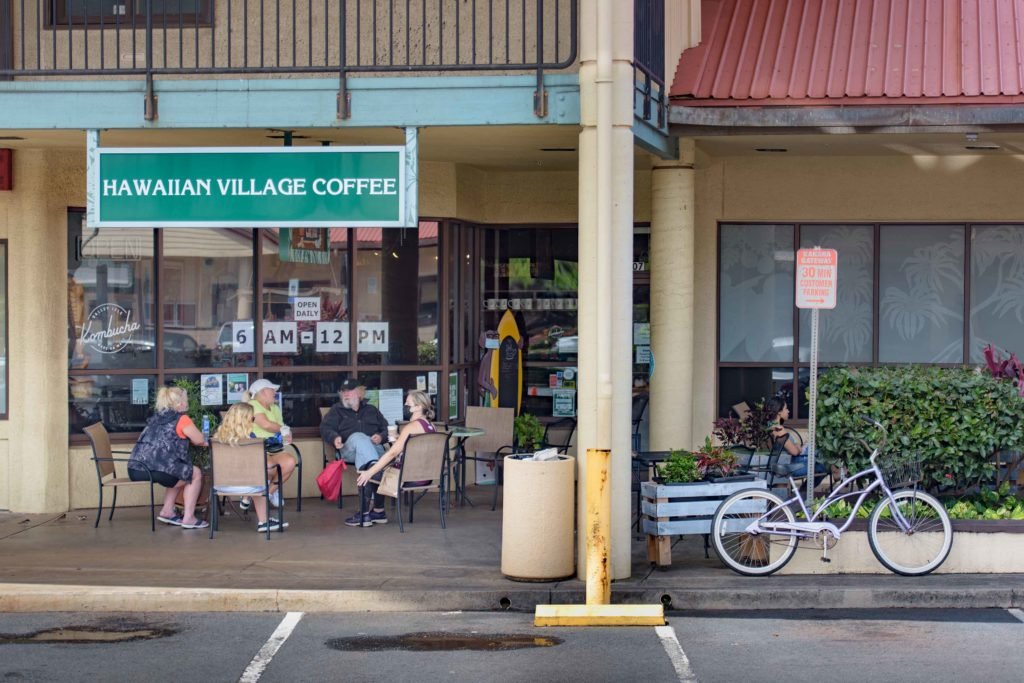
West Maui's dining culture has long divided along a clear axis: resort-facing establishments built for visitors arriving by shuttle or rental car, and working local spots that serve the people who actually live on the island. Hawaiian Village Coffee, positioned along the Honoapiilani Highway corridor near Lahaina, belongs firmly to the second category. The highway itself is one of the most scenically loaded stretches of road in the Hawaiian Islands, tracing the coastline between Kahului and the far reaches of Kapalua, and coffee stops along it carry a different kind of weight than the curated café experiences found inside resort complexes. They are functional, unpretentious, and often the leading read on what the local agricultural community is actually producing.
Hawaii's specialty coffee culture has developed its own logic over the past two decades. Kona coffee from the Big Island established the premium end of the market, but Maui-grown beans, particularly from the Kaanapali and Upcountry regions, have built a credible identity of their own. Roadside spots that prioritise locally sourced coffee sit inside a meaningful tradition: the idea that what grows on the island should, where possible, be consumed on the island before it is exported. Hawaiian Village Coffee operates within that framework, positioning itself as a farm-adjacent stop rather than a brand-driven café chain.
The Sequence of a Stop: From First Look to Last Sip
Approaching along Highway 30, the experience is shaped by the surrounding environment before anything inside comes into focus. The West Maui Mountains press close on one side; the ocean tends to assert itself on the other, depending on the direction of light. Coffee stops along this corridor function as decompression points as much as hospitality experiences, and the pacing of a visit reflects that. There is no theatre of arrival, no valet queue, no dress consideration. The progression from car to counter is short, and the rhythm of the place is set by the coastline's own tempo rather than any designed sequence.
In Hawaii's café culture more broadly, the tasting arc at this kind of establishment tends to move from cold preparation through brewed coffee, with local flavour combinations, including Kona blends, macadamia notes, and seasonal fruit accompaniments, forming the middle register of the experience. Locally sourced coffee stops along the West Maui highway corridor typically orient their offering around Hawaiian-grown beans and a small food programme suited to travellers pausing mid-journey rather than settling in for a long meal.
The practical register of the stop matters to travellers moving between Lahaina's waterfront, where restaurants like Aloha Mixed Plate and Castaway Cafe anchor the casual dining scene, and the more resort-facing establishments further north. Hawaiian Village Coffee occupies the interstitial space between those poles, and its address on HI-30 makes it a natural point of orientation for the day.
Lahaina's Café Culture in Wider Context
Lahaina's dining scene has historically been shaped by its status as a former whaling port turned tourist destination, a combination that produces a food environment heavy on plate-lunch traditions, fresh seafood, and Polynesian-inflected cooking. Operations like Cane and Canoe represent the more formal end of that tradition, while Banyan Tree and Betty's Beach Cafe occupy the mid-range. Coffee culture in the area tends to function as connective tissue between those dining nodes rather than as a destination category in its own right.
That positioning has its own integrity. In food cities where coffee culture has become a heavily theorised category, with tasting flights, single-origin certification programmes, and competitive barista credentials displayed prominently, the simpler Hawaii model, where local beans, local preparation, and the agricultural logic of the island do the talking, can read as genuinely grounded. Compare the experience to the multi-course precision of The French Laundry in Napa or the sourcing rigour of Blue Hill at Stone Barns in Tarrytown, and the contrast clarifies what highway-side café culture is actually doing: it is serving the place rather than performing it.
That distinction matters more in post-2023 Lahaina than almost anywhere else in Hawaii. The August 2023 wildfire reshaped the town's relationship to its own identity, and the local businesses that have continued to operate along the West Maui corridor carry a particular weight as anchors of community continuity. Coffee culture, which tends to sustain itself through daily local patronage more than tourism alone, is one of the more resilient formats in that context.
Placing the Stop: Planning Your Visit
Hawaiian Village Coffee sits at 4405 HI-30, on the Lahaina side of the Honoapiilani Highway, making it accessible for travellers arriving from the Kahului direction before reaching the waterfront, or as an exit point heading back toward the airport. The practical recommendation is to check current operating status before building it into a tight itinerary.
For travellers building a broader West Maui day, the coffee stop pairs logically with the plate-lunch tradition at Aloha Mixed Plate, or as a morning prelude before settling into the more structured dining at Cane and Canoe for the evening.
Hawaiian Village Coffee represents a deliberate gear change rather than a compromise. Hawaii's road-food culture operates by entirely different standards, and reading it on its own terms is part of what a well-calibrated trip to West Maui requires.