Why go
Named house blends, roasted daily
Two roasters run inside the shop and the beans are roasted fresh each day, which is the plainest way to understand Ichikawa Ya Coffee. The menu is built on named blends rather than a broad cafe list: Ichikawa Blend, Seiji Blend, Umamachi Blend and an ice coffee blend. They are not only menu labels. The shop sells them as retail coffee in 200g and 500g bags, plus gift sets and a three-variety tasting set, so the same blends define the cup in the machiya and the bag you carry out.
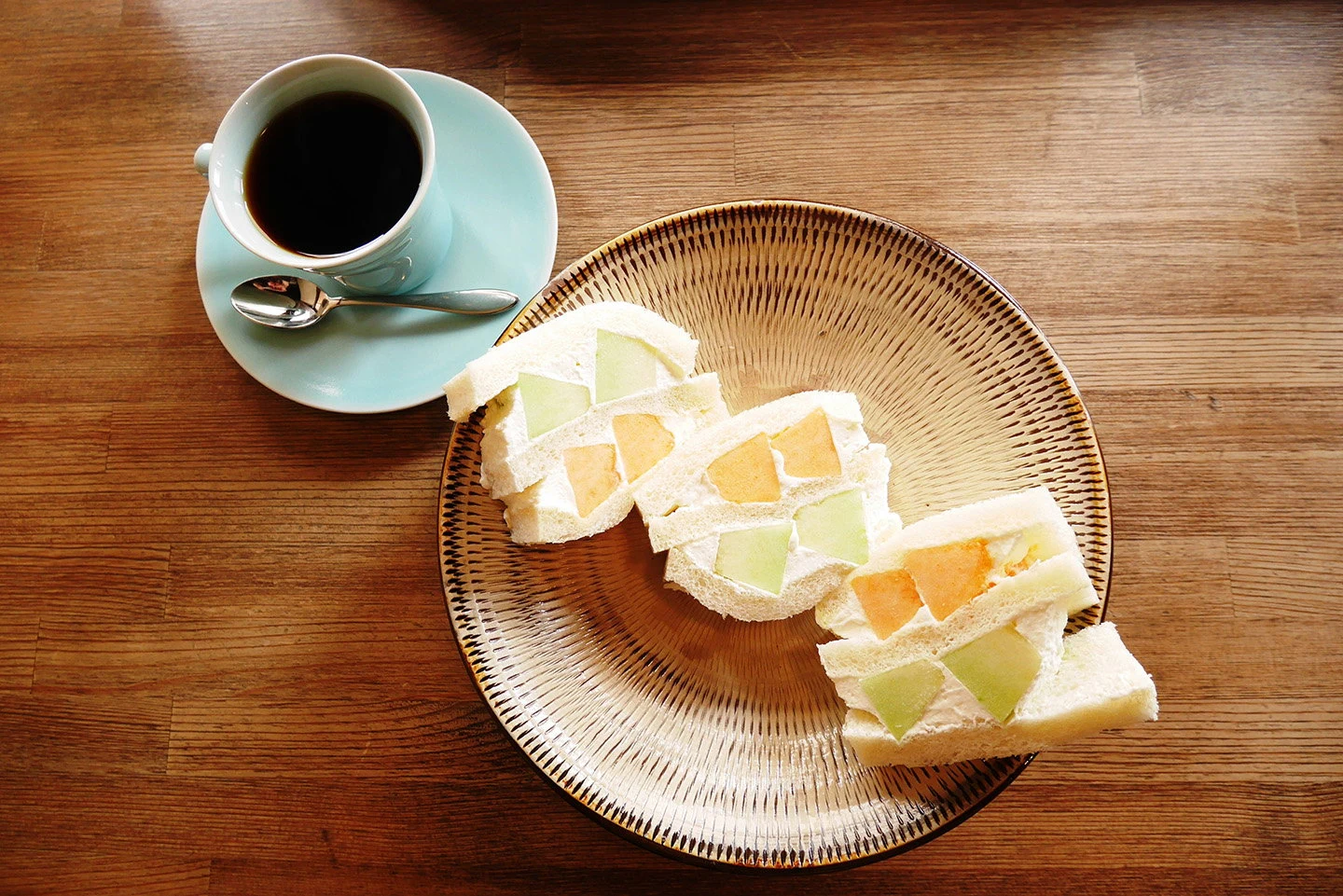
Service is equally specific. Coffee is poured by nel drip, the cloth-filter method tied to the slower Japanese coffee-house tradition, and the representative order pairs a house blend with the shop's seasonal fruit sandwich. A Seiji cup and saucer sits among the goods along with several mugs, which shows how closely coffee, vessel and presentation are held together here.
A 200-year-old machiya between the temples
Ichikawa Ya Coffee opened in 2015 inside a 200-year-old Kyoto machiya that had been the founding family's grandfather's pottery workshop. The cafe keeps that craft lineage visible instead of covering it with a modern fit-out. Set between Kiyomizu and Sanjusangendo, it falls naturally into a walk through old streets and temple districts.
Arrival is part of it. The shop is approached down a narrow lane, marked by a pale blue, Seiji-colored enamel sign and a white noren curtain. Inside, heavy beams and a tsuboniwa courtyard anchor the room. The building sets the pace: coffee and a fruit sandwich are things to sit with while looking at timber and courtyard light, less a quick stop than a pause in a former workshop reinterpreted through daily roasting and nel drip.
Order the seasonal fruit sandwich first
The seasonal fruit sandwich is the signature food order. The cafe treats it as its best-known plate and presents it directly beside the coffee, which makes it the clearest expression of the menu beyond the blend list. It is a dessert-adjacent pairing rather than proof of a large lunch offer.
Take it with a named blend. Ichikawa Blend is the obvious first cup because it carries the shop's name; Seiji Blend connects to the blue sign and the matching cup and saucer. Umamachi Blend adds a third house profile, and the ice coffee blend shows that cold service gets its own roast rather than a leftover. If the plan is to keep drinking this coffee at home, the three-variety tasting set carries the same blend-led logic onto the shelf. Daily roasting, nel drip and the fruit sandwich describe this place better than any generic cafe order would.
Tags
Frequently asked questions
What should I order at Ichikawa Ya Coffee?
The seasonal fruit sandwich with a named house blend is the representative order. Ichikawa Blend is the obvious first cup because it carries the shop's name, while Seiji Blend connects to the pale blue sign and the matching cup and saucer. The ice coffee blend is a separate roast rather than a leftover.
Does Ichikawa Ya Coffee roast its own beans?
Yes. Two roasters run inside the shop and the beans are roasted fresh each day, then brewed by nel drip, the cloth-filter method associated with the slower Japanese coffee-house tradition. The same blends are sold as retail coffee in 200g and 500g bags, with gift sets and a three-variety tasting set.
Compare nearby places
| Venue | Type | Area |
|---|---|---|
| Dessert Cafe Chourakukan | Café | Higashiyama |
| Cafe Bibliotic Hello! | Café | Downtown Kyoto |
| Kaikado Cafe | Café | Shimogyo |
| ELEPHANT FACTORY COFFEE | Café | Nakagyo Ward |
| Cafe Karirenge | Café | Nakagyo-ku |