Why go
Normal Heights and the Rise of Neighbourhood Creameries
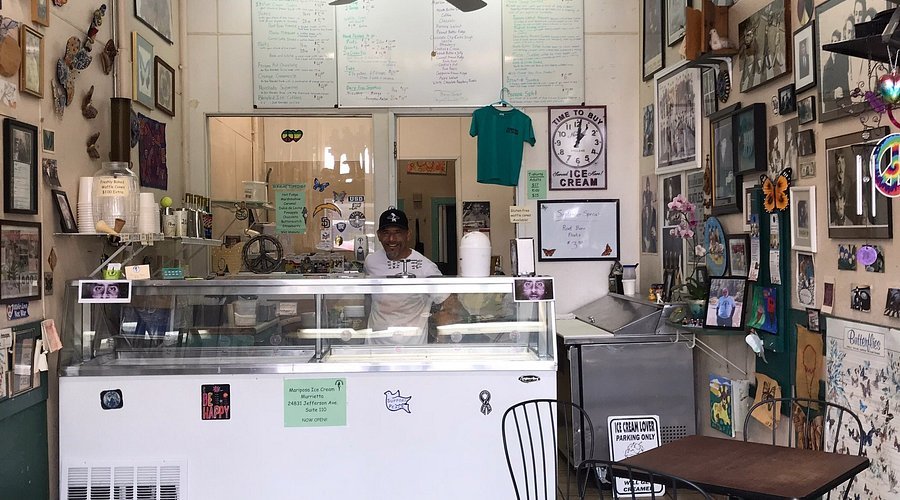
Adams Avenue runs through Normal Heights with the character of a street that has kept its independent local businesses. Record shops, vintage furniture dealers, and independent food producers share blocks that have held onto a local rhythm. Mariposa Ice Cream at 3450 Adams Ave sits inside that ecosystem as a small-batch ice cream shop shaped by repeat local visits.
San Diego's artisan ice cream category has grown steadily over the past decade, with independents increasingly defined by flavour rotation and neighborhood loyalty. At the casual neighbourhood end, shops compete on rotating flavours, local ingredient sourcing, and walk-in accessibility. Mariposa occupies that neighbourhood tier, on a street where foot traffic comes from residents rather than destination visitors, which shapes both what the shop makes and how it operates.
How the Artisan Creamery Format Has Shifted
The evolution of independent ice cream shops in American cities over the past fifteen years follows a recognisable arc. Early movers in the late 2000s differentiated primarily on novelty: unusual flavours, liquid nitrogen theatrics, or elaborate sundae formats borrowed from dessert bars. By the mid-2010s, a second wave moved toward ingredient provenance and smaller batch sizes, positioning against the novelty tier through quality signals rather than spectacle. Many neighbourhood creameries now focus on consolidating a loyal local following and refining a core repertoire.
Adams Avenue shops that have lasted through multiple cycles tend to share a few characteristics: genuine neighbourhood roots and a product that rewards repeat visits. For ice cream specifically, the seasonal rhythm matters. San Diego's mild climate extends the viable season considerably compared to northern markets, which means a shop on Adams Avenue can operate year-round without the sharp off-season revenue drops that challenge creameries in colder cities.
Placing Mariposa in San Diego's Wider Food Scene
San Diego's food scene is often discussed through its higher-end anchors. Addison represents the city's fine dining ceiling, a French and Contemporary destination that competes in a national comparable set alongside Le Bernardin in New York City, Alinea in Chicago, and The French Laundry in Napa. At the Japanese counter tier, Soichi holds a $$$$ position that aligns it with serious omakase operators nationally. These are destination restaurants drawing visitors specifically for the meal.
Mariposa operates in a completely different register. It is neighbourhood infrastructure rather than destination dining, the kind of place that appears in a resident's weekly rotation rather than a visitor's itinerary. That distinction matters when situating it alongside San Diego's more formal dining options such as 1450 El Prado or the historically rooted 94th Aero Squadron. Those venues draw on occasion; a good neighbourhood creamery draws on Tuesday afternoon.
The broader American dining scene has increasingly recognised that neighbourhood-scale food producers carry cultural weight. Farms-to-table tasting menu operations like Blue Hill at Stone Barns in Tarrytown or community-anchored restaurants like Bacchanalia in Atlanta operate with their own sense of place and rootedness. A neighbourhood ice cream shop on Adams Avenue functions differently but shares that turn toward specificity in American food culture.
What the Normal Heights Location Signals
A shop at 3450 Adams Ave is not trying to capture tourist traffic from the Gaslamp Quarter or Balboa Park. It is not positioned for the hotel guest or the convention attendee. The Adams Avenue address signals a deliberate choice to operate within a neighbourhood ecosystem, where the competitive set is other local independents rather than the chain dessert category. For shops that make that choice, longevity tends to depend on product consistency and genuine community integration rather than marketing reach.
Normal Heights has historically been one of San Diego's more musically and artistically active inner suburbs, with Adams Avenue functioning as its commercial spine. The street has seen cycles of activation and quieter periods, but its independent character has proved more durable than similar corridors in cities where development pressure moved faster. For a small food producer, that stability is an asset. The audience is formed, the street has identity, and a shop that earns its place in the neighbourhood's rhythm can hold it for years.
San Diego's broader inner-suburb food culture also benefits from the city's year-round climate in ways that are easy to underestimate. Ice cream is not a seasonal product here the way it is in Chicago or Boston. A shop on Adams Avenue can count on consistent demand across twelve months, which changes the operational calculus significantly compared to markets where creameries must generate the bulk of their revenue in a four or five month window.
Planning a Visit
Mariposa Ice Cream is located at 3450 Adams Ave in Normal Heights, accessible by car with street parking typical of the Adams Avenue corridor, and reachable via San Diego's bus network for those approaching from central neighbourhoods. Given the shop's neighbourhood format, there is no booking required: this is a walk-in operation suited to the spontaneous rhythm of a stroll along Adams Avenue rather than a scheduled dining event. 94th Aero Squadron San Diego and beyond.
Lazy Bear in San Francisco, Providence in Los Angeles, Single Thread Farm in Healdsburg, Atomix in New York City, or internationally at 8 1/2 Otto e Mezzo Bombana in Hong Kong, Mariposa asks almost nothing of the visitor in logistical terms. That accessibility is, in its own way, part of what neighbourhood-format food culture offers: the low-friction entry point that keeps a community coming back rather than treating a meal as an event requiring advance planning.