Why go
Monmouth Street and the Argument for Staying Small
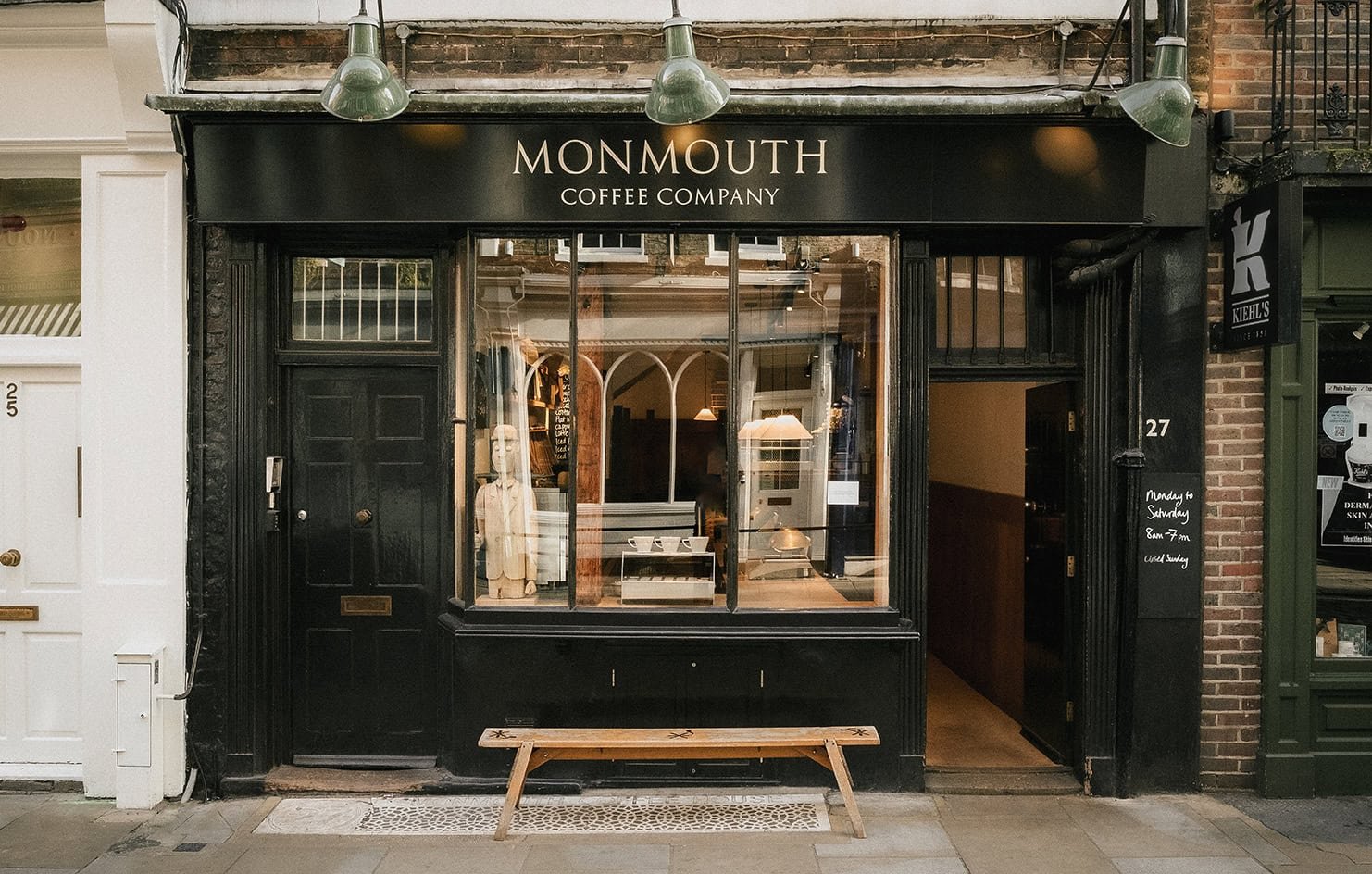
Seven Dials sits at an unusual crossroads in central London. The neighbourhood radiates outward from a Victorian column at the junction of seven streets, each lined with a mix of independent boutiques, theatre-adjacent cafés, and the kind of small-format shops that survive in this part of Covent Garden partly by reputation and partly by stubbornness. It is not a destination that rewards rushing through. Monmouth Coffee Company, at number 27, has been one of the anchoring reasons to slow down on this street for years, long before specialty coffee became a category that any Londoner needed to explain.
The room on Monmouth Street is narrow, with wooden fixtures, sacks of green and roasted coffee stacked openly, and a counter that faces the street rather than retreating from it. The smell arrives before you do. There is bench seating along one wall and limited room to stand, which means the space operates on a kind of informal rotation: people come in, order, drink, leave. The absence of Wi-Fi is not advertised as a feature but functions as one, keeping the crowd oriented toward conversation or the cup in front of them rather than the kind of laptop colony that has colonised cafés across Soho and Fitzrovia.
What Monmouth Street Coffee Culture Looks Like in Practice
London's specialty coffee scene has expanded considerably in the past fifteen years, with roasters and café operators proliferating across East London in particular. The city's relationship with coffee, however, runs through a handful of addresses that predate that expansion and helped establish the vocabulary that newer operators now build on. Monmouth is among the most cited of those addresses, referenced across specialty coffee discussions in the way that Borough Market is referenced in conversations about London's food retail: as an institution that shaped what came after it.
Monmouth Coffee Company's Borough Market branch, a few minutes from London Bridge station, operates out of a railway arch and draws a different crowd to Monmouth Street: market visitors, commuters cutting through, and traders from the market itself. The two sites are distinct in atmosphere while sharing the same sourcing orientation, which focuses on direct relationships with producers and a commitment to filter coffee that treats it with the same seriousness that London's wine trade gives to grapes. Both sites are walk-in friendly and open early on weekdays, which means queue length is the main variable any first-time visitor needs to account for.
The Place of a Coffee Shop in a City Built Around Dinner Reservations
London's food and drink identity is heavily weighted toward the reservation-based dinner experience. The city's most discussed dining addresses, from CORE by Clare Smyth and Restaurant Gordon Ramsay to Sketch, The Lecture Room and Library and The Ledbury, operate on tasting-menu formats at price points that require planning weeks or months in advance. Dinner by Heston Blumenthal sits in the same tier. These are experiences shaped by ceremony, timing, and pre-commitment.
A coffee shop like Monmouth operates at a completely different register, but it occupies a similar position in terms of reference: it is the kind of place that appears on the short list when someone who cares about what they eat and drink is asked to describe London's character. That alignment, between Michelin-recognised kitchens and a walk-in coffee counter, says something about how a city builds a food identity across price tiers and formats rather than concentrating it at one end of the spending range.
For visitors combining London with broader UK dining itineraries, that context matters. The country's kitchen talent is distributed well beyond the capital, with destinations such as Waterside Inn in Bray, Le Manoir aux Quat'Saisons in Oxford, L'Enclume in Cartmel, Moor Hall in Aughton, Gidleigh Park in Chagford, Hand and Flowers in Marlow, hide and fox in Saltwood, Midsummer House in Cambridge, Opheem in Birmingham, and Restaurant Andrew Fairlie in Auchterarder all drawing serious attention outside London. When those trips begin or end in the capital, Monmouth Street is one of the addresses that calibrates expectations downward in the leading sense: good coffee requires no ceremony, no booking, and no theatre.
For those building an international itinerary, the contrast extends across the Atlantic. High-commitment tasting-room experiences like Le Bernardin in New York City and Atomix in New York City share the same planning logic as London's Michelin tier. Monmouth operates on none of those terms.
Planning a Visit: Walk-In Reality and Comparable Options
Both the Monmouth Street and Borough Market sites operate on a walk-in basis. Queues at Monmouth Street are typically manageable on weekday mornings before nine and tend to lengthen between nine and eleven. Borough Market queues follow market-day patterns, with Saturday mornings being the busiest window by a significant margin. Neither site takes advance orders, and the menu is oriented around coffee rather than food, though pastries and bread from select suppliers are generally available alongside espresso and filter.
| Venue | Format | Booking | Busiest Period | Location |
|---|---|---|---|---|
| Monmouth Coffee (Monmouth St) | Walk-in café | No booking | Weekday 9–11am | Seven Dials, WC2 |
| Monmouth Coffee (Borough Market) | Walk-in café | No booking | Saturday morning | Borough Market, SE1 |
| Kaffeine (Fitzrovia) | Walk-in café | No booking | Weekday morning | Great Titchfield St, W1 |
| Workshop Coffee (Clerkenwell) | Walk-in café | No booking | Weekday morning | Clerkenwell Rd, EC1 |
Monmouth sits among London's specialty coffee addresses: all four operate on a no-reservation basis, all are weighted toward the morning window, and all draw a similar audience of coffee-focused rather than convenience-focused visitors. What separates Monmouth is longevity and reference density: it appears in coffee discussions with a frequency that newer operators have not yet matched, even as the technical quality of London's café scene has risen across the board.
Frequently Asked Questions
- What do people recommend at Monmouth Coffee Company?
- Monmouth's reputation centres on its filter coffee, which has historically been the focus of its sourcing programme and the drink most associated with the counter. Espresso-based drinks are available and competently made, but visitors who follow specialty coffee coverage tend to default to filter as the more representative choice. Pastries from partner bakers are typically on offer alongside, though the food selection is deliberately limited to keep the emphasis on the cup. See also the broader context of London's café and dining scene in our full London restaurants guide.
- Can I walk in to Monmouth Coffee Company?
- Both London sites, Monmouth Street in Seven Dials and the Borough Market arch, operate entirely on a walk-in basis with no reservations and no advance ordering. Given that London's most recognised dining addresses, including CORE by Clare Smyth and Restaurant Gordon Ramsay, require booking weeks in advance, the no-reservation format is a functional distinction worth noting when planning a day. Arriving before nine on a weekday at the Monmouth Street site typically means a short or no queue.
- Does Monmouth Coffee Company sell its beans to take home?
- Retail bags of roasted coffee are available at both the Monmouth Street and Borough Market locations, which is a central part of how the company has built its audience over time. The retail offer runs alongside the café service at the counter, meaning visitors can taste a particular coffee and purchase the same beans in the same visit. This makes the Monmouth Street site function as both a café and a direct retail channel for the roastery, a dual-purpose format that distinguishes it from cafés operating purely as service venues. For those travelling beyond London, the same beans can be sourced through the company's mail-order service.